Six of Swords — Tarot Card Meaning
Swords
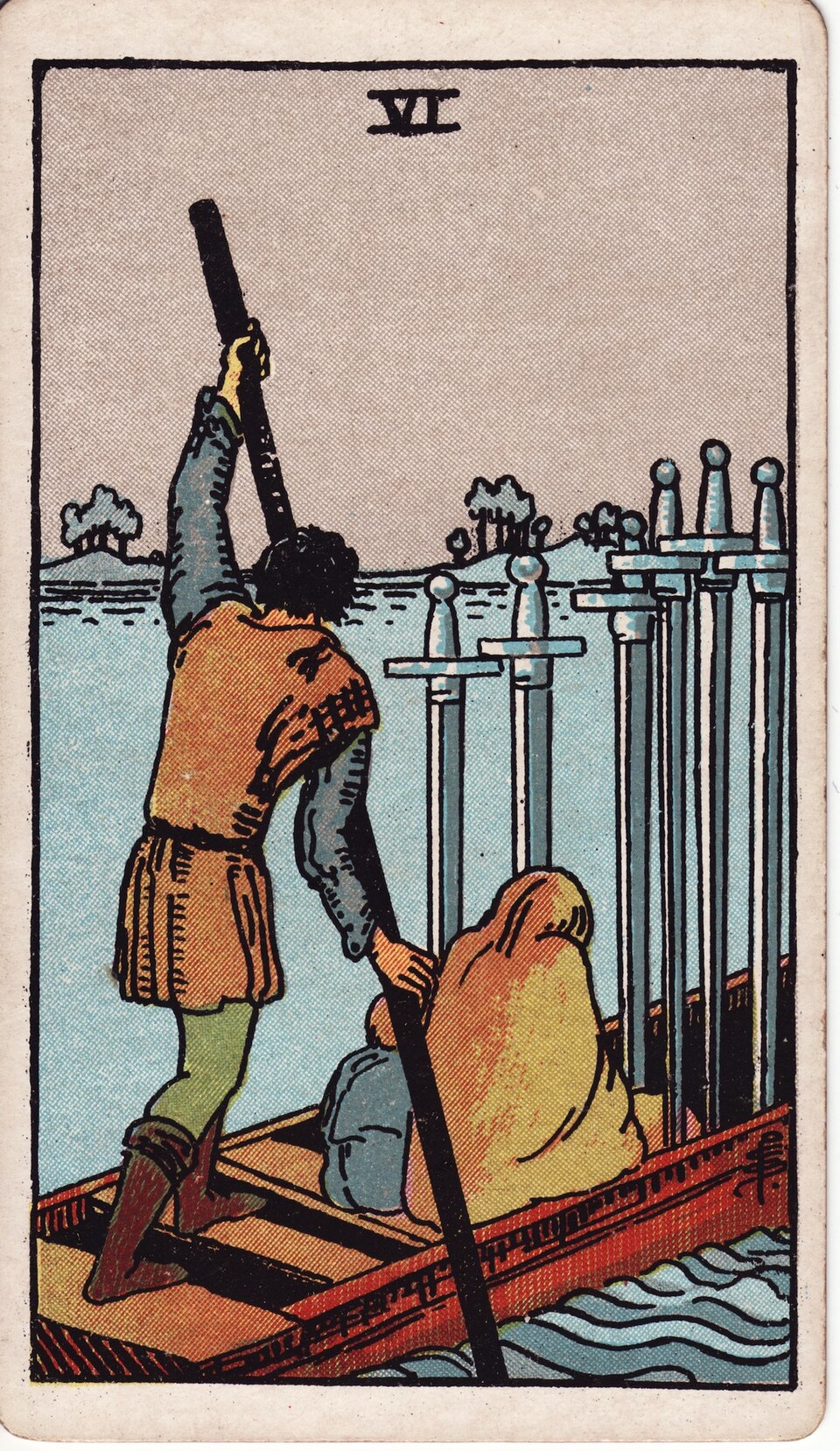
The Six of Swords is a card of transition, healing, and moving forward after a period of difficulty. Depicting a ferryman guiding a boat carrying six swords and a cloaked figure, it symbolizes the emotional and mental journey toward calmer waters. This card often appears when you are leaving behind a situation that no longer serves you, even if the departure is bittersweet. The water in the imagery represents the subconscious, and the swords signify intellectual challenges that must be left behind. The card's energy is not about sudden transformation but gradual, deliberate progress — a slow crossing from turmoil to tranquility. On Mystral, we interpret this card as a sign that the worst is over, but you must still actively participate in your own healing by releasing old thought patterns and attachments.
Upright meaning
When the Six of Swords appears upright in a reading, it signals a necessary transition. You are moving away from a turbulent phase — perhaps a job loss, a breakup, or a period of grief — and toward a more stable and peaceful state. The key theme here is release: you are consciously letting go of what caused you pain, even if you still feel attached to it. This card often appears when you are in the midst of a physical relocation, a change in career, or a shift in your personal identity. The journey is not easy; the water in the card is choppy, indicating that the path ahead still has challenges. However, the ferryman (often interpreted as a guide or your own higher self) ensures you are not alone. The swords — representing your thoughts and beliefs — are being carried with you, meaning you cannot simply abandon your past experiences; you must integrate them and learn from them. Financially, the upright Six of Swords suggests moving away from debt or instability, perhaps through a carefully planned budget or a new source of income. In health, it indicates recovery from illness or mental exhaustion. Spiritually, it encourages you to trust the process of healing and to accept that some things must be left behind for growth to occur. This card advises patience: the crossing takes time, but the destination is worth the effort.
Reversed meaning
The reversed Six of Swords indicates resistance to the necessary transition. You may be clinging to a past situation out of fear, guilt, or a false sense of security. The boat is metaphorically stuck in the water, unable to move forward because you are not ready to release the swords — the old beliefs, grudges, or painful memories that keep you tied to the past. This card can also point to a failed attempt to escape a problem: you tried to leave but ended up returning to the same toxic patterns. Perhaps you relocated physically but brought your emotional baggage with you, or you ended a relationship only to find yourself in a similar dynamic. Reversed, the Six of Swords warns against denial. You may be telling yourself that everything is fine when it is not, or you may be avoiding the necessary work of healing. In career and finances, this reversal can indicate a setback in a planned move or investment, or a refusal to accept a change that is already happening. Emotionally, it suggests unresolved grief or trauma that keeps resurfacing. The reversed card asks you to look inward and ask: what is preventing me from moving forward? Sometimes the answer is fear of the unknown, or a mistaken belief that staying in pain is safer than facing the uncertainty of healing. This is a call to seek support — therapy, coaching, or trusted friends — to help you navigate the crossing. The reversed Six of Swords does not mean the journey is impossible; it means you are not yet ready to take it. Honor that resistance, but do not let it become permanent.
In love and relationships
In a love context, the upright Six of Swords often signals a transition after a difficult emotional period. If you are single, this card suggests that you are healing from a past relationship and slowly opening yourself to new possibilities. The pain is not forgotten, but you are no longer defined by it. You may be moving to a new city or starting a new social circle, which will naturally bring new connections. If you are in a relationship, the card indicates that you and your partner are navigating a rough patch and consciously choosing to move forward together. It can also represent a literal move — relocating as a couple, or adjusting to a new phase like marriage or parenthood. The key is that both parties are willing to leave old arguments or resentments behind. Reversed, the Six of Swords in love warns of a refusal to let go. You may be holding onto a relationship that is already over, or you may be trying to 'fix' a partner who is not ready to change. Alternatively, you could be avoiding a necessary breakup because you fear the pain of separation. In some readings, reversed indicates that one partner has physically left but emotionally remains entangled, creating confusion and stagnation. The card advises you to be honest with yourself about whether the relationship is truly moving forward or just stuck in a cycle of disappointment. If you are single and the card reversed, you may be idealizing an ex or refusing to see the flaws in a past connection. Healing requires acknowledging the truth of what happened, not just the pleasant memories. The reversed Six of Swords in love is a call to release the fantasy and embrace the reality of your current emotional landscape.
In career and finances
The upright Six of Swords in a career reading indicates a transition toward a more stable and fulfilling professional path. You may be leaving a job that was stressful or unfulfilling, either by choice or because of circumstances like a layoff. The card suggests that you are moving toward a role that better aligns with your skills and values, even if the initial steps feel uncertain. Financially, it represents a move from debt to solvency, or from financial chaos to a structured budget. The crossing is slow but steady — you are not expected to become wealthy overnight, but you are on the right track. This card can also appear when you are relocating for work, or when you are shifting industries entirely. The key is that you are actively managing the transition, not just passively letting it happen. Reversed, the Six of Swords in career warns of a stalled transition. You may have tried to leave a job but ended up staying, or you may be in a position that feels like a dead end because you are not willing to take the risk of change. Financially, reversed indicates that you are avoiding necessary financial decisions — for example, you might be ignoring debt or refusing to cut expenses. The card can also point to a failed business venture or a relocation that didn't work out as planned. The reversed energy asks you to examine what is holding you back: fear of failure, lack of confidence, or attachment to a specific outcome. In some cases, the reversed Six of Swords suggests that you need to seek professional advice — a financial planner, career coach, or mentor — to help you navigate the choppy waters. Do not try to force the transition; instead, identify the underlying resistance and address it directly.
The card's advice
The Six of Swords advises you to accept that change is a process, not an event. You cannot rush the journey from pain to peace; you must allow yourself to move at the pace that feels right, even if that pace is slow. The card's primary message is to release what no longer serves you — whether that is a toxic relationship, a dead-end job, a limiting belief, or a painful memory. But release does not mean forgetting; it means integrating the lessons and then letting the emotional weight go. The ferryman in the card represents the guidance available to you — through intuition, mentors, or therapeutic support. Do not be afraid to ask for help. The swords are sharp, but they are also symbols of clarity; once you cross the water, you will have a clearer mind and a more peaceful heart. The Six of Swords also advises you to focus on the destination, not the turbulence around you. The boat is moving forward, even if the water is rough. Keep your eyes on the far shore. In practical terms, this card suggests creating a plan for your transition: break it down into small steps, set timelines, and celebrate each milestone. If you are feeling stuck, ask yourself: 'What is one thing I can let go of today?' It could be a resentment, a fear, or a physical object that ties you to the past. The card's energy is gentle but firm — it does not allow you to stay in the same place forever. You are being called to move, and the movement itself is the healing.
Combinations with other cards
The Six of Swords combined with the Death card (XIII) amplifies the theme of profound transformation. Death is about endings that lead to rebirth, and together these cards indicate a major life transition — perhaps leaving a marriage, a career, or a country — that will fundamentally change your identity. The journey is irreversible, but it leads to renewal. With the Star (XVII), the Six of Swords suggests a healing journey guided by hope and spiritual insight. The Star brings clarity and inspiration, making the crossing feel less lonely and more purposeful. This combination often appears after a period of trauma, indicating that you are moving toward a state of inner peace. When the Six of Swords appears with the Ten of Wands, it warns that you are carrying too much baggage into the new phase. The Ten of Wands represents burden and overwork; combined with the Six of Swords, it suggests that you need to shed some of your responsibilities or emotional weight before you can truly move forward. If you pair the Six of Swords with the Knight of Cups, the transition is fueled by emotional openness and romantic idealism. You may be moving toward a new relationship or a creative project that feels deeply fulfilling. The Knight of Cups adds a sense of romantic quest, but caution is needed — the Knight can be overly idealistic, so ensure your plans are grounded. With the Four of Swords, the combination emphasizes rest and recuperation. The Four of Swords is a card of meditation and recovery; together with the Six of Swords, it indicates that you need to pause and reflect before continuing the journey. This can be a powerful combination for those recovering from burnout or illness. Finally, the Six of Swords with the World (XXI) is a very positive sign: you are completing a major cycle and moving toward a state of fulfillment and integration. The World signifies successful completion, and the Six of Swords shows the final leg of the journey. This combination often appears when you are about to achieve a long-term goal, such as graduating, finishing a project, or moving to a new country.
Frequently Asked Questions
What does the Six of Swords mean in a yes/no reading?
The Six of Swords generally leans toward 'yes' but with conditions. It indicates that you are moving toward a resolution, but the process will take time and effort. The answer is not an immediate 'yes' — it is a 'yes, if you are willing to let go of the past and trust the journey.' If you are asking about a specific outcome, the card suggests that you are on the right path, but you must actively participate in the transition.
Does the Six of Swords always mean a physical move?
No, the Six of Swords often symbolizes emotional or mental transition, not necessarily a physical relocation. The boat crossing the water is a metaphor for moving from one state of mind to another. While it can indicate a literal move, especially when combined with cards like the Chariot or the Eight of Wands, its primary meaning is about leaving behind old patterns, beliefs, or situations. The physical move is just one possible expression of that energy.
Why does the Six of Swords have six swords? What do they represent?
The six swords in the card represent the mental burdens, thoughts, and beliefs that you carry with you during a transition. They are arranged in a way that suggests they are being transported, not discarded. The number six in Tarot often relates to harmony, balance, and integration. In this context, the six swords symbolize the intellectual challenges you have faced and the lessons you have learned — you are not leaving them behind entirely, but you are integrating them into a new phase of life. The swords are placed upright in the boat, indicating that they are still sharp and potentially dangerous, but they are now under your control.
Can the Six of Swords reversed indicate a return to a toxic situation?
Yes, the reversed Six of Swords can definitely indicate a return to a toxic relationship, job, or environment. The card suggests that you tried to leave but ended up going back, often because you were not fully ready to release the emotional attachment. It can also mean that you physically left but brought the same toxic dynamics with you, so the situation remains unchanged. The reversed card warns you to examine your motivations: are you returning out of genuine need, or out of fear of the unknown? If the latter, you may need to seek external support to break the cycle.
How does the Six of Swords relate to grief or loss?
The Six of Swords is deeply connected to grief and the process of mourning. It often appears after a significant loss — the death of a loved one, the end of a relationship, or the loss of a job — and indicates that you are moving from acute grief into a phase of acceptance and healing. The card does not promise that the pain is gone, but it shows that you are no longer drowning in it. The ferryman represents the support you have (or need) to navigate grief. The water symbolizes the emotional depths you are traversing. The Six of Swords encourages you to honor your grief while also allowing yourself to move forward, even if it feels like a betrayal of the memory of what you lost.
Discover Mystral
Unlock deeper insights into your personal journey with a full Tarot reading on Mystral. Explore the Six of Swords and all 78 cards in our interactive deck.
Try for free