Nine of Swords — Tarot Card Meaning
Swords
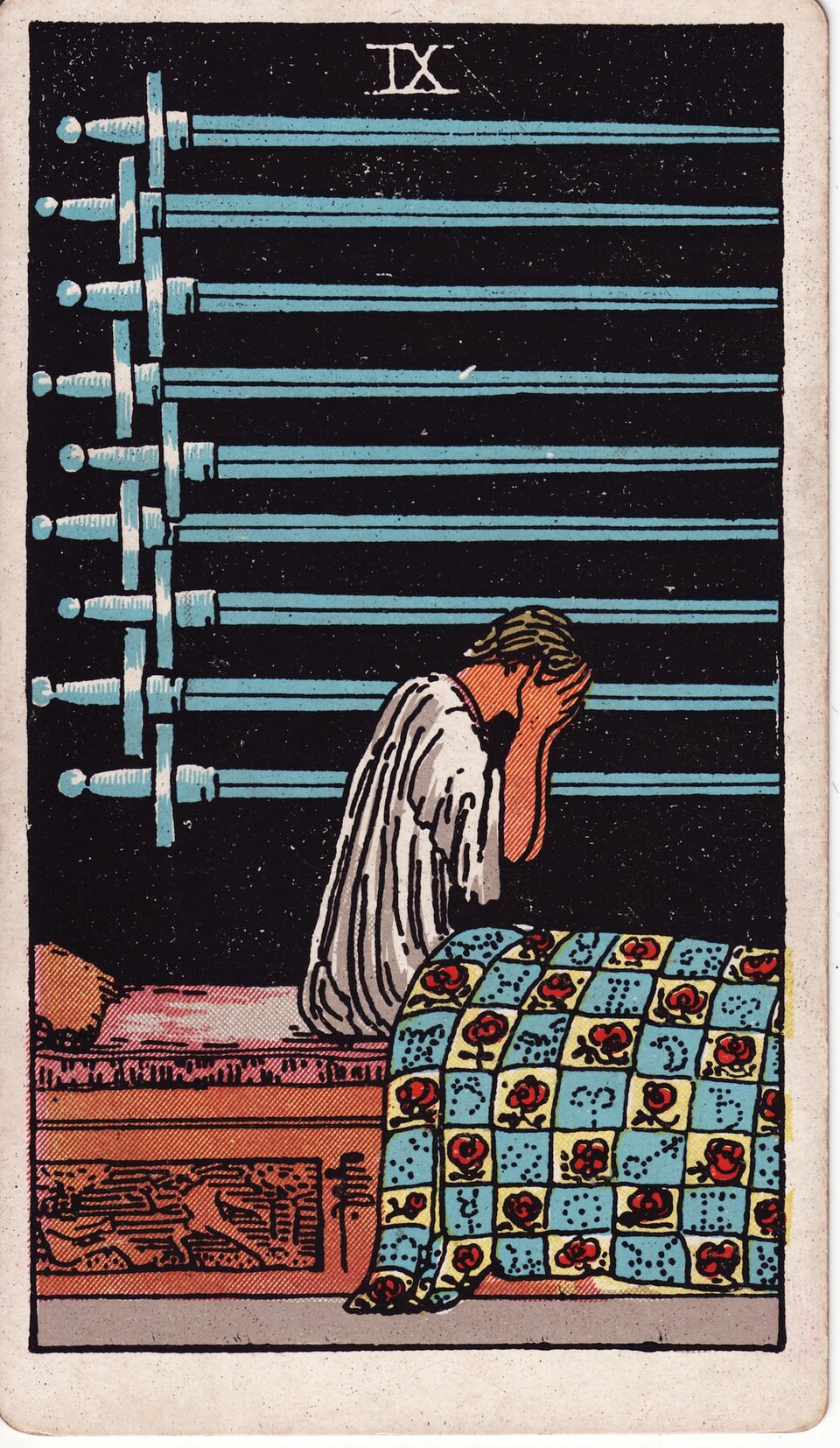
The Nine of Swords is perhaps the most visceral Tarot card when it comes to mental and emotional suffering. Unlike cards that depict physical conflict, this card plunges the querent into the realm of nightmares, guilt, and unrelenting worry. The image of a figure sitting upright in bed, head in hands, surrounded by nine swords, conveys a state of acute distress that has no immediate external cause. The black background symbolizes the darkness of despair, while the quilt adorned with roses and astrological symbols hints that the torment is rooted in past experiences and personal patterns. This card does not predict a catastrophe; it reveals the catastrophe already happening within the mind. Its deeper message is that the only way out is to face the fear directly, to name it, and to seek the support that the isolated figure refuses to ask for.
Upright Meaning
When the Nine of Swords appears upright, it signifies a period of intense mental anguish, often manifesting as anxiety, insomnia, nightmares, or obsessive rumination. The querent may feel trapped by their own thoughts, replaying past mistakes or imagining worst-case scenarios that have not and may never occur. The card is associated with guilt, shame, and the weight of secrets that have not been confessed. Unlike the Ten of Swords, which represents a definitive ending, the Nine of Swords is a state of suffering that feels endless but is not yet fatal. It often appears when the individual is ignoring their own emotional needs or when they have taken on excessive responsibility for others. Physical symptoms like tension headaches, a racing heart, or digestive issues may accompany the mental stress. The swords do not physically harm the figure; they exist in the mind, which means the battle is internal. This card urges the querent to stop intellectualizing pain and to feel it fully, because suppression only intensifies the agony. It also warns against catastrophizing: the difference between an actual crisis and a perceived one can be vast. The Nine of Swords asks you to distinguish between justified concern and irrational fear. In readings, it often emerges when someone is about to make a decision driven by panic rather than clarity. The card's appearance is a call to reach out to a therapist, a trusted friend, or a spiritual guide before the mind spirals further. It does not signal a permanent condition; rather, it is a wake-up call that the current coping mechanisms are failing. The figure in the card has not been stabbed; the swords are suspended in the air or hanging on the wall in some decks, illustrating that the threat is imagined or exaggerated. Yet the suffering is real. The upright Nine of Swords validates the querent's pain without encouraging them to remain stuck in it. It says: 'You are hurting, but you are not dying. Your fear is a messenger, not a monster.' This card also relates to the astrological sign of Gemini, particularly its shadow side of mental overactivity and nervous energy, and to the decan of the Moon in Gemini which heightens emotional sensitivity and mood swings.
Reversed Meaning
The reversed Nine of Swords indicates a gradual release from the grip of fear and anxiety. The nightmare is ending; the querent is waking up to the reality that many of their worries were exaggerated or self-created. This reversal often appears after a period of intense therapy, a difficult conversation, or a personal breakthrough where the individual finally names the source of their distress. It can also signal that the person is learning to forgive themselves for past mistakes and to stop punishing themselves mentally. However, the reversal is not always positive in the sense of complete resolution. It can also represent denial: the querent may be suppressing their anxiety so forcefully that it will erupt later, or they may be refusing to acknowledge that they need help. In some contexts, the reversed card points to paranoia that has become debilitating, where the person is seeing threats where none exist. Another layer is the release of guilt: the swords fall away as the figure begins to understand that they did the best they could with the knowledge they had. This card can herald a turning point in mental health journeys, especially when paired with cards like The Star or The Sun. It suggests that the worst is over, but residual anxiety may still linger. The querent is encouraged to maintain their support systems and not to isolate themselves again. Physically, the reversal can reflect the dissipation of stress-related symptoms: improved sleep, reduced tension, and a calmer nervous system. In financial or career contexts, it means the querent is beginning to see solutions to problems that previously seemed insurmountable. They might finally ask for a deadline extension, delegate tasks, or admit to a mistake without fearing the end of the world. The reversed Nine of Swords also cautions against becoming complacent too soon: healing is not linear, and old thought patterns may resurface. The card's message is to stay vigilant but not paranoid, to celebrate small victories, and to remember that the mind's power to torment is matched by its power to heal. In some decks, the figure in the reversed card shows a slight smile or a more relaxed posture, indicating the first hints of relief. The key is that the reversal is a process, not an instant cure. For those who have been suffering from chronic anxiety, this card offers a promise that the frequency and intensity of attacks will diminish if the inner work continues.
In Love and Relationships
In love readings, the Nine of Swords upright often reflects the internal fears that a person brings into a relationship rather than a problem with the partner per se. The querent may be haunted by past betrayals, projecting their own insecurities onto the current partner. They might lie awake worrying that their lover will leave, cheat, or that they themselves are not good enough. This card can also point to a secret guilt — perhaps the querent has been unfaithful or dishonest and is consumed by the fear of being discovered. For couples, the card suggests a lack of trust that is eroding the bond from within. It can indicate one partner's mental health struggles that are putting strain on both parties, especially if the other partner feels helpless. Communication often breaks down because the anxious partner cannot articulate what they need. The reversed Nine of Swords in a relationship context signals a healing phase: the couple has weathered a crisis, or one partner has started therapy and is learning to manage their fears. It can indicate a period of honest conversations where previously hidden insecurities are brought into the light. For singles, the upright card warns against letting fear of rejection or past heartache prevent new connections. They may sabotage potential partnerships by overthinking every text, every gesture. The reversed card advises the single querent to release the narrative that they are unlovable and to approach dating with a little more faith and a little less self-criticism. In either position, this card urges the querent to differentiate between a relationship that is genuinely harmful versus one that triggers their own unresolved wounds. If the partner is supportive, the anxiety belongs to the querent, not the partnership. The card's appearance in a love reading is a strong indicator that internal work is necessary before external harmony can be achieved. Couples may benefit from couple's therapy if the pattern of worry is pervasive. For those in new relationships, the Nine of Swords asks them to slow down and not let imagination run wild. It is a card that says: 'Your partner is not your ex; your past is not your future.' In readings about commitment, the upright card may show a deep-seated fear of marriage or permanent union, often rooted in childhood experiences. The reversed card suggests that the querent is ready to take a leap of faith after a period of doubt.
In Career and Finances
When the Nine of Swords appears in a career context, it nearly always points to overwhelming stress, burnout, or imposter syndrome. The querent may feel they are underperforming, about to be fired, or unable to meet deadlines even if there is no objective evidence to support these fears. The card often appears during high-pressure periods such as performance reviews, project launches, or after taking on too much responsibility. The source of anxiety can be internal (perfectionism) or external (a toxic boss, unreasonable expectations). Financial readings with this card upright indicate sleepless nights over debt, bills, or money mismanagement. The fear of poverty may be exaggerated, but the emotional toll is real. The card warns against making financial decisions based on panic, such as rash investments or selling assets at a loss. It urges the querent to get a clear picture of their actual financial situation rather than guessing. For entrepreneurs, the Nine of Swords highlights the loneliness of decision-making, where the fear of failure can paralyze action. The reversed Nine of Swords in career suggests that the worst of the stress is lifting. The querent may have finally asked for help, taken a sick day, or received reassurance from a supervisor. It can indicate a job change that reduces mental strain, or a successful resolution to a conflict. In financial terms, the reversal points to beginning to pay off debts, reaching out to a financial advisor, or developing a realistic budget. It advises against ignoring financial problems, because denial only leads back to the upright position. In job interviews or career transitions, the upright card can reflect the candidate's anxiety about not being good enough, even if they are highly qualified. The reversal suggests that they will overcome that anxiety and present themselves honestly. For those in creative fields, the Nine of Swords can represent writer's block or performance anxiety that stems from a fear of judgment. The card's message is the same: the fear is not the enemy; the refusal to face it is. The querent is encouraged to map out their actual risks — the worst-case scenario is rarely as catastrophic as the mind imagines. If the card appears alongside the Ace of Pentacles, it may indicate that the financial anxiety is unfounded and new opportunities are emerging. Conversely, with the Five of Pentacles, the anxiety may be grounded in actual material scarcity, requiring practical action rather than psychological reassurance alone.
The Card's Advice
The Nine of Swords gives very direct advice: stop wrestling with your thoughts alone. The card's central figure sits in isolation, refusing to get out of bed or call for help, and the swords multiply because of that silence. The first piece of advice is to name the fear. Write it down. Speak it aloud to someone you trust. The moment a fear is articulated, it loses some of its power because it becomes concrete rather than a formless dread. The second piece of advice is to check the facts: ask yourself what evidence you have that the worst will happen. Most catastrophes exist only in the future tense. The card also advises physical intervention: if you cannot sleep, get up and change the environment. Do not lie in bed ruminating. The act of moving, making tea, or even opening a window signals to the nervous system that you are safe. The third piece of advice is to forgive yourself for whatever guilt you are carrying. The card's swords often represent self-punishment over past mistakes that cannot be undone. The card says: 'You have suffered enough. Forgive yourself or seek forgiveness from the person you wronged.' The advice also addresses the habit of taking on others' problems. The querent may be absorbing the anxiety of a loved one or feeling responsible for outcomes beyond their control. The Nine of Swords advises setting boundaries and recognizing that you are not the savior of everyone. In terms of action, the card suggests reaching out to a mental health professional if the anxiety is chronic. It is not a sign of weakness; it is the most practical step. Meditation, journaling, and breathwork are also advised, but only if they are used as tools, not as avoidance. The card warns against using substances (alcohol, sleeping pills) to escape the mind, as that often worsens the root issue. Finally, the Nine of Swords advises the querent to remember that this too shall pass. The darkest hour is just before dawn, and dawn is inevitable. The card's message is not to eliminate fear but to learn to coexist with it without letting it dictate decisions. It encourages the querent to take one small action today — a conversation, an apology, a doctor's appointment — that breaks the cycle of inactivity. The moment action is taken, the nightmare begins to recede.
Combinations with Other Cards
The Nine of Swords interacts powerfully with other cards, clarifying the root of the anxiety or pointing to a resolution. When paired with The Tower, the combination signals a sudden crisis that triggers acute mental distress — a job loss, a breakup, or a shocking revelation. Unlike the Nine alone, this combination suggests that the fear is grounded in a real upheaval, and the querent must rebuild from the rubble. The Tower asks them to find a foundation again, while the Nine reminds them to process the emotional shock without spiraling. With The Moon, the combination deepens the theme of hidden fears and illusions. The Moon already represents confusion, deception, and the unconscious; the Nine of Swords adds the layer of paranoia and nightmares. This duo often appears when the querent is being lied to or is lying to themselves. It warns against making decisions based on intuition alone — facts must be checked thoroughly because the shadows are thick. A second opinion or professional guidance is essential here. The Star following or paired with the Nine of Swords is a healing combination. The Star brings hope, serenity, and a sense of spiritual renewal after the storm. If these cards appear together, it indicates that relief is not only possible but imminent. The querent should lean into self-care and faith, understanding that the worst has been survived. The Star softens the Nine's edge and suggests that the anxiety is dissolving. The Ten of Swords combined with the Nine of Swords is an intense but clarifying duo. The Ten represents a definitive end — betrayal, rock bottom, or a painful conclusion. Together, they show that the mental anguish has reached its peak and that the only direction is up. This combination often appears in readings about divorce, bankruptcy, or severe illness, indicating that while the suffering is real, the nadir has been reached. It advises the querent to let the old self die and not cling to what is already gone. With the Four of Swords, the combination suggests a need for rest and mental retreat. The Four is the card of meditation, hospital stays, or taking a break. The Nine's anxiety is the reason the querent needs to step back. This pairing advises the querent to prioritize sleep, unplug from stressors, and give the mind a chance to reset. It warns against pushing through exhaustion. With the Page of Cups, the combo indicates that the anxiety stems from unexpressed emotions, often related to a creative project or a sensitive heart. The Page of Cups invites the querent to allow themselves to feel without judgment, to cry, to write poetry, or to release the emotional block. The Nine of Swords with the King of Pentacles suggests financial fear is dominating the mind, but the King assures that with disciplined planning, the material situation can be stabilized. This combination encourages the querent to seek a financial advisor or to create a concrete budget rather than stewing in worry. With the Ace of Swords, the combination is a powerful call to cut through the mental fog with clarity and truth. The Ace represents a breakthrough idea, a necessary confrontation, or a decision that ends the rumination. The querent should trust their intellect and speak the truth, even if it is uncomfortable. Each combination with the Nine of Swords reveals that while the pain may feel singular, it is always connected to a broader pattern or a potential turning point.
Frequently Asked Questions
Does the Nine of Swords always mean something bad will happen?
No, the Nine of Swords does not predict an external disaster. It primarily reflects the internal state of the querent: anxiety, guilt, and worry. The card often appears when the person is anticipating a catastrophe that has not occurred and may never occur. In readings, it is a warning about the destructive power of fear itself, not a prophecy of doom. The outcome depends on whether the querent heeds the card's advice to confront their fears and seek support. When paired with uplifting cards like The Star or The Sun, it indicates that the suffering is psychological and will pass.
How is the Nine of Swords different from the Ten of Swords?
The Nine of Swords represents a state of intense mental suffering that feels like a nightmare, while the Ten of Swords signifies a definitive ending or rock-bottom event — a betrayal, a loss, or a death of some kind. The Nine is about fear of what might happen; the Ten is about what has already happened. The figure in the Nine is sitting up, alive and tormented, whereas the figure in the Ten is lying face down with ten swords in the back, symbolizing finality. The Nine offers a chance to intervene before a crisis; the Ten asks the querent to accept that the end has come and to begin healing.
Can the Nine of Swords be a positive card in any context?
Yes, but its positivity is subtle. The Nine of Swords is a wake-up call. It forces the querent to acknowledge that they cannot continue living in a state of denial or avoidance. By shining a harsh light on the inner turmoil, the card gives the person an opportunity to address the root cause of their anxiety, guilt, or insomnia. When reversed, it becomes even more positive, indicating the release of fear and the beginning of mental clarity. In some readings, it can also represent a person who is highly sensitive and intuitive, but that sensitivity has turned into paranoia without balance.
What should I do if I keep getting the Nine of Swords in readings?
If the Nine of Swords appears repeatedly, especially upright, it is a strong sign that you need to interrupt the cycle of worry and self-criticism. This card suggests that you are caught in a loop of negative thinking that is not serving you. Practical steps include starting a daily journal to differentiate between rational concerns and irrational fears, speaking with a therapist, or making an appointment with a doctor to rule out physical causes like sleep disorders. It also recommends reaching out to a trusted friend or mentor to break the isolation. The card's repetition indicates that you have not yet taken the action necessary to quiet the mind.
Does the Nine of Swords always relate to anxiety, or can it indicate actual danger?
While the Nine of Swords primarily relates to internal fears, it can sometimes appear when the querent is in a genuinely unsafe situation, particularly if combined with cards like The Tower, The Devil, or the Five of Swords. In those instances, the card validates that the fear is a survival instinct. However, the card still emphasizes that the worst part is the mental torment. Even in dangerous circumstances, the card advises not to let fear paralyze action — it encourages seeking help, leaving a toxic environment, or reporting abuse. The card's core message remains: do not suffer alone, and do not let fear keep you trapped.
Discover Mystral
If the Nine of Swords has appeared in your reading, don't let the fear win. Explore a deeper personalized spread on Mystral — our expert readers can guide you through the shadows and help you turn anxiety into clarity. Start your session now.
Try for free