Four of Swords — Tarot Card Meaning
Swords
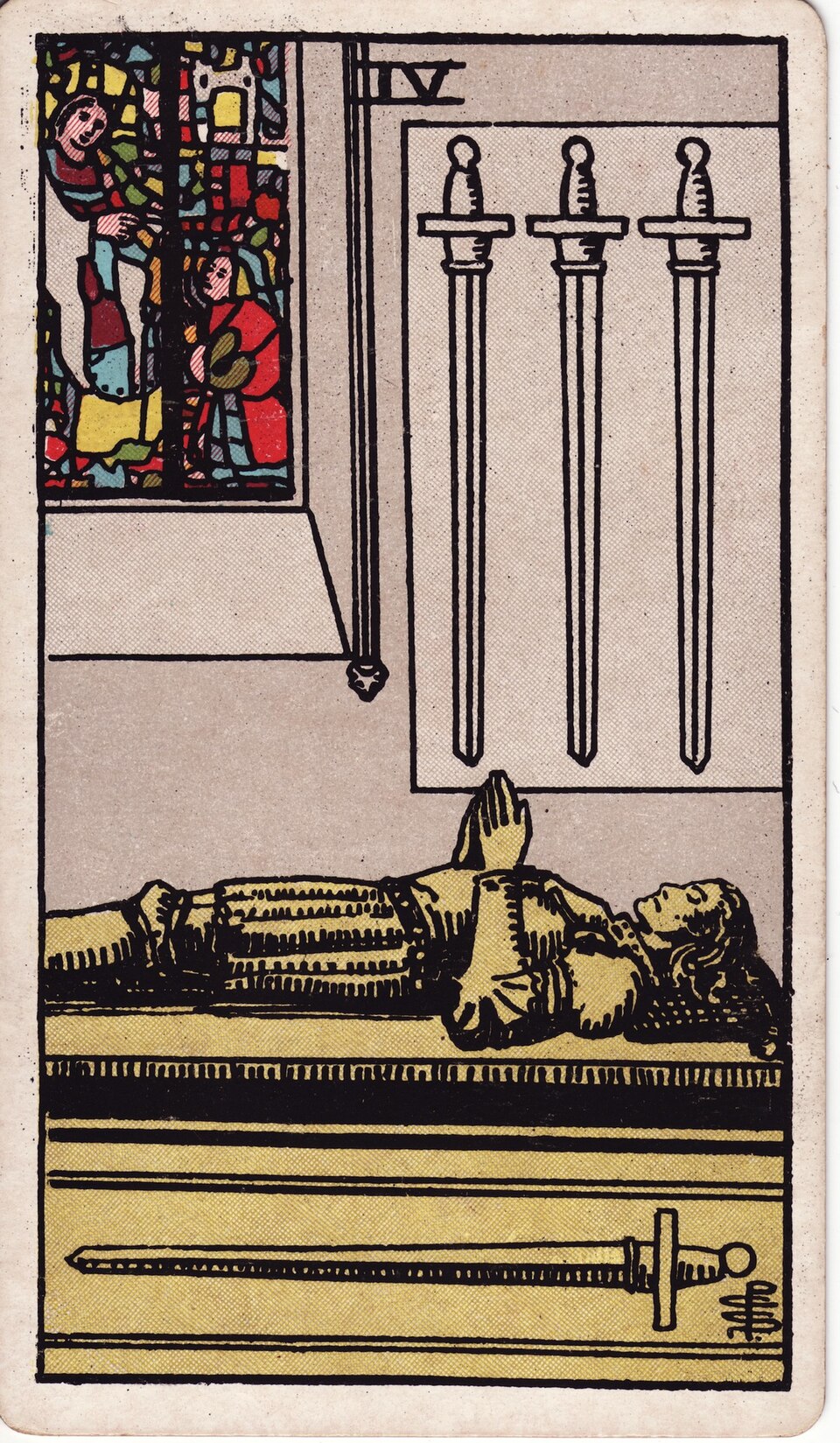
The Four of Swords is a card of stillness, mental retreat, and recuperation. Unlike the aggressive energy of other Swords cards, this one invites you to step back from battle and find sanctuary in quiet contemplation. It often appears when your mind is exhausted from overthinking or when you need to recover from a stressful period. The card depicts a knight lying in rest within a chapel, symbolizing the sacred necessity of pausing to heal. This is not about giving up, but about strategic withdrawal to regain strength before moving forward.
Upright meaning
When the Four of Swords appears upright, it signals a time of necessary rest and mental recovery. You may have been pushing yourself too hard, and your mind is now demanding a break. This card encourages you to step away from conflicts, deadlines, or emotional turmoil and enter a period of solitude. It is a pause that allows you to recharge, reflect, and gain clarity. In readings, it often follows a period of intense mental activity or stress, suggesting that you need to meditate, sleep, or simply be still. The upright Four of Swords is not about laziness; it is about conserving energy for future challenges. Think of it as a strategic retreat where you analyze past battles and plan your next move. This card can also indicate a need for medical rest or recovery from illness. In some contexts, it represents a temporary withdrawal from the world to focus on spiritual or intellectual pursuits. Famous figures who embodied this energy include the philosopher Marcus Aurelius, who wrote his 'Meditations' during periods of solitary reflection; the scientist Isaac Newton, who isolated himself during the plague years to develop his theories; and the artist Frida Kahlo, who turned her bedridden convalescence into a creative sanctuary. Their examples show that rest can be profoundly productive. The upright Four of Swords assures you that stepping back is not a sign of weakness but a prerequisite for sustained achievement.
Reversed meaning
The reversed Four of Swords suggests that you are resisting the need for rest or that your attempts at stillness are being disrupted. You may be pushing yourself into burnout, ignoring fatigue, or refusing to take a break because you fear falling behind. This card warns that mental exhaustion is imminent if you continue at this pace. Alternatively, it can indicate that a period of rest has ended and you are now ready to re-engage with the world. In some readings, the reversed Four of Swords points to insomnia, anxiety, or restless thoughts that prevent you from finding peace. You might be trying to meditate but cannot quiet your mind, or you are avoiding the solitude that could actually heal you. This card can also signify that a retreat or time-out was interrupted, leaving you feeling unrefreshed. In career contexts, it may mean you are overworking without allowing yourself recovery, leading to errors and diminished creativity. In relationships, it can indicate that one partner is pushing for space while the other refuses to grant it, causing tension. The reversed Four of Swords urges you to recognize that your body and mind are sending distress signals. If you ignore them, a forced rest—like illness or breakdown—may occur. Historical parallels include the burnout of composer Pyotr Tchaikovsky, who drove himself to exhaustion before his final symphony; or the collapse of athlete Simone Biles during the Olympics, demonstrating that even champions must heed their limits. The reversed card is a wake-up call: stop fighting the need for rest, or you will be stopped.
In love and relationships
In a love reading, the Four of Swords often indicates a need for space and solitude within the relationship. This does not necessarily mean a breakup; rather, it suggests that one or both partners require time alone to process emotions or recover from conflict. If you are single, this card advises you to take a break from active dating and focus on self-care and inner healing. Pursuing a partner while exhausted or mentally scattered will only attract mismatched connections. For those in a relationship, the Four of Swords can represent a period of calm after a storm—a time to quietly rebuild trust and understanding without pressure. It may also indicate that one partner is emotionally or mentally drained and needs to retreat temporarily. In some cases, this card appears when a couple decides to take a 'relationship sabbatical' to reassess their goals. The reversed Four of Swords in love suggests that one partner is resisting this needed space, leading to arguments or resentment. Alternatively, it can mean that a period of separation is ending and the couple is ready to reunite with renewed perspective. Famous couples who exemplified the Four of Swords dynamic include the poet Rumi and his spiritual companion Shams Tabrizi, who had periods of intense separation that deepened their bond; and the artists Frida Kahlo and Diego Rivera, whose time apart often fueled their individual creativity. The card's message is clear: love thrives when both individuals honor their own need for rest and reflection.
In career and finances
When the Four of Swords appears in a career reading, it strongly advises a pause. You may be overworking, facing burnout, or stuck in a cycle of unproductive busyness. This card suggests taking a sabbatical, a vacation, or simply stepping back to reassess your professional path. It is not a time for aggressive job hunting or major financial risks. Instead, focus on planning, strategizing, and recovering your mental energy. In financial matters, the Four of Swords indicates a period of stability where no major gains or losses occur—a time to conserve resources rather than invest impulsively. It can also represent a 'financial retreat,' such as paying down debt or building an emergency fund before making big moves. For entrepreneurs, this card warns against expanding too quickly; slow down and solidify your foundation. If you are unemployed, the Four of Swords suggests that rest and skill-building are more valuable than frantic applications. The reversed Four of Swords in career warns that you are ignoring signs of burnout, leading to mistakes or conflicts with colleagues. It may also indicate that a break was cut short and you are returning to work prematurely. Financially, reversed can mean unexpected expenses that force you to dip into savings. Historical business figures who understood the value of strategic rest include Warren Buffett, who famously spends hours reading and thinking rather than trading; and Steve Jobs, who took retreats to focus on product vision. The card's advice: step away from the grind to see the bigger picture.
The card's advice
The Four of Swords advises you to embrace stillness as a tool for strength. Do not mistake inactivity for laziness; true rest is active recuperation. Your mind needs a break from constant analysis and worry. This card recommends practices such as meditation, journaling, or spending time in nature to quiet the mental chatter. It also suggests that you create a physical sanctuary—a quiet room, a comfortable chair, or a dedicated space for reflection. If you are facing a difficult decision, the Four of Swords says to postpone it until you have clarity. Rushing will only lead to regret. The card also advises you to set boundaries around your time and energy. Say no to extra commitments that drain you. In relationships, give your partner space if needed; distance can strengthen connection. Financially, avoid making large purchases or investments until you have fully rested and researched. The reversed Four of Swords warns that if you ignore this advice, you will face burnout, illness, or a forced halt. The card's energy is similar to the concept of 'shabbat' or a digital detox—a deliberate pause to reset. Famous leaders who followed this principle include the Dalai Lama, who prioritizes daily meditation; and author J.K. Rowling, who took breaks between Harry Potter books to recharge. The Four of Swords reminds you that rest is not the opposite of success; it is a necessary component of it. Heed its call to avoid a crash.
Combinations with other cards
When combined with the Death card, the Four of Swords suggests a transformative rest period—a death of old patterns followed by rebirth. This pairing often appears after a major life change, indicating that you need time to grieve and integrate before moving forward. With the Knight of Swords, the Four of Swords warns against rushing headlong into a plan without pausing to think. The Knight's impulsiveness must be tempered by stillness. If paired with the Ten of Wands, the combination emphasizes burnout from overwork and the urgent need to lay down burdens. The Four of Swords with the High Priestess indicates a time of deep inner knowing; meditation will reveal hidden truths. With the Star, the card suggests that hope and healing come through rest; trust that recovery is underway. In a negative context, the Four of Swords combined with the Five of Cups can mean that you are isolating yourself in grief too long—rest is needed, but not to the point of stagnation. With the Ace of Swords, the combination points to a breakthrough idea that emerges after a period of mental stillness; clarity comes from silence. In a career reading, the Four of Swords with the Page of Pentacles advises using a sabbatical to learn a new skill. Financially, with the Four of Pentacles, it suggests hoarding resources rather than spending—a conservative approach. The reversed Four of Swords with the Nine of Wands can indicate that you are pushing through exhaustion but nearing the end of your endurance. Each combination tailors the card's meaning to specific contexts, but the core message remains: rest is not optional, it is strategic.
Frequently Asked Questions
Does the Four of Swords always mean I need to take a vacation?
Not necessarily a literal vacation, but it does signal a need for mental and physical rest. This could mean setting aside a few hours daily for quiet reflection, reducing your workload, or taking a short break from social media. The card's core message is that your mind is overloaded and requires a deliberate pause to function properly again.
Can the Four of Swords indicate a health issue?
Yes, especially when reversed or appearing alongside cards like the Ten of Swords or the Tower. It can point to exhaustion, insomnia, stress-related illnesses, or the need for medical rest. In upright position, it often suggests that rest will prevent illness; reversed, it warns that ignoring the need for rest may lead to a health crisis.
How does the Four of Swords differ from the Four of Cups?
The Four of Cups represents emotional apathy and missed opportunities, while the Four of Swords is about mental retreat and strategic rest. The Cups card is more about dissatisfaction and withdrawal from feelings; the Swords card is about actively choosing to quiet the mind to gain clarity. Both involve stillness, but the Four of Swords is more purposeful and restorative.
What if the Four of Swords appears in a reading about a new relationship?
It suggests that you or your potential partner may need to take things slowly. Rushing into a new relationship while mentally exhausted can lead to misunderstandings. The card advises building a foundation of trust through calm communication rather than intense passion. If you are already in a new relationship, it may indicate a brief period of distance to allow feelings to settle.
Is the Four of Swords a negative card?
No, it is generally neutral to positive. It only becomes negative if you ignore its message, leading to burnout or forced rest. Upright, it is a helpful reminder to recharge. Reversed, it warns of the consequences of overwork. The card's energy is ultimately protective—it encourages you to preserve your mental health so you can continue your journey with renewed strength.
Discover Mystral
Explore your own need for rest with a personalized Tarot reading at Mystral. Our expert interpreters can help you decode the Four of Swords and other cards in your unique spread.
Try for free