The Hierophant — Tarot Card Meaning
Major Arcana
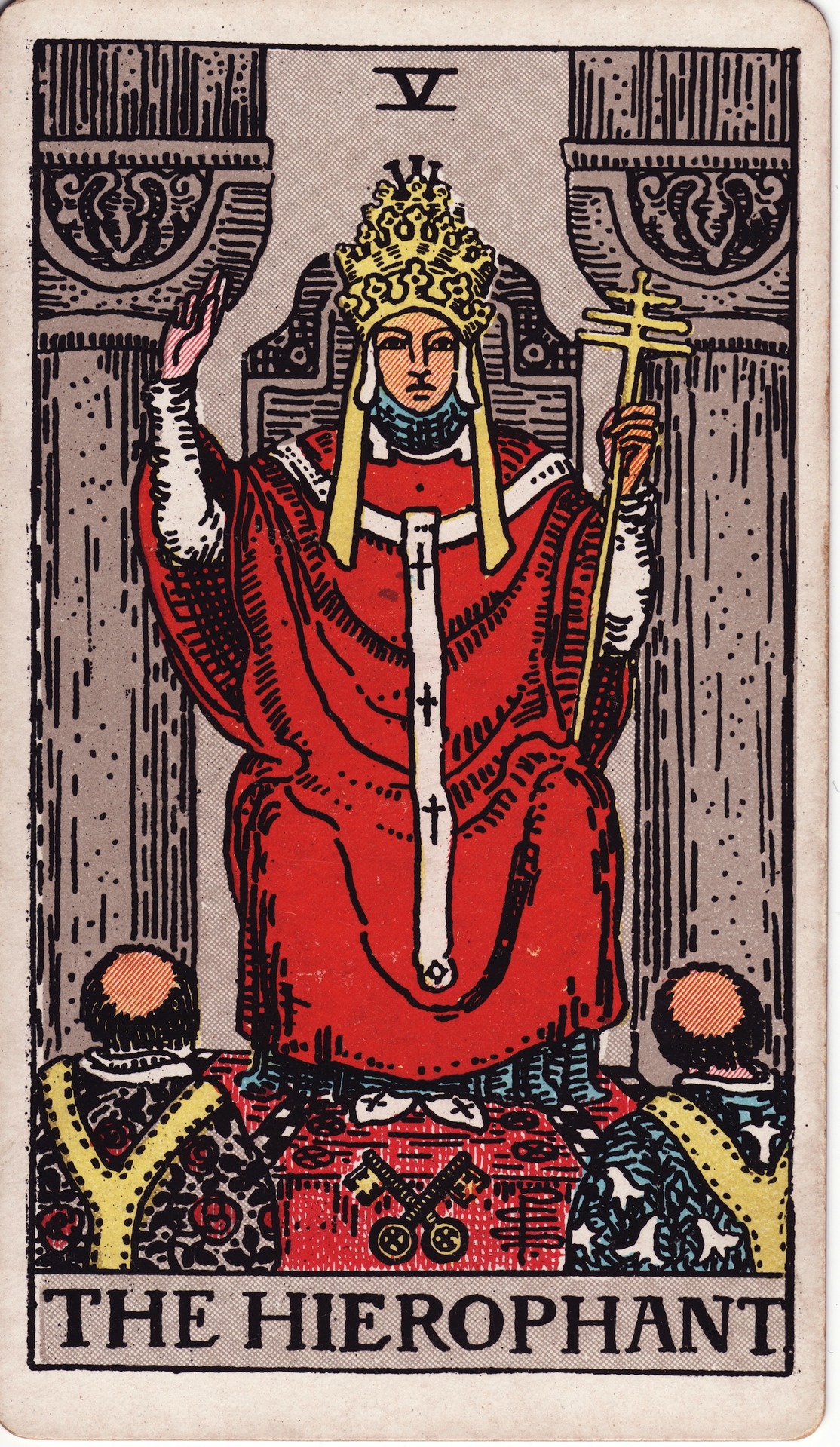
The Hierophant, card number 5 in the Major Arcana, stands as the archetype of tradition, spiritual authority, and formal education. Unlike The High Priestess, who represents inner, esoteric knowledge, The Hierophant governs external, structured belief systems and the transmission of wisdom through established channels. This card often appears when you are being called to learn from a mentor, adhere to a set of ethical principles, or participate in a recognized institution. Its energy is conservative, grounded, and focused on preserving time-tested values.
Upright Meaning
When The Hierophant appears upright in a reading, its core message revolves around conformity to social or spiritual structures for the sake of growth and stability. This card signifies a time when you benefit from following rules, seeking guidance from a teacher, or joining a community built around shared beliefs. The Hierophant is not about rebellion or innovation; it asks you to trust the established path. In practical terms, this means enrolling in a formal course, consulting with a religious leader, or committing to a long-standing tradition like marriage or a corporate hierarchy. The card also highlights the importance of ritual and ceremony as anchors for meaning. For example, attending a weekly service, following a set meditation routine, or adhering to a code of ethics at work are all activities aligned with The Hierophant's energy. Its appearance suggests that wisdom is available through disciplined study and that shortcuts or unorthodox methods will not serve you now. The card carries the weight of ancestral knowledge, implying that your current situation has been navigated successfully by many before you. By respecting this lineage, you align with a force larger than yourself, which provides both protection and clear direction. The Hierophant also represents the role of the intermediary—a therapist, a lawyer, a priest, or a professor—whose expertise you need to access right now. Transparency and commitment to the group's standards are essential; any deviation from agreed-upon norms will likely cause disruption. This card's upright placement assures you that structure is not your enemy but your scaffold for reaching higher understanding.
Reversed Meaning
In its reversed position, The Hierophant signals a break from tradition, a questioning of authority, or the rejection of dogmatic structures. This card often appears when you feel suffocated by rigid systems—be they religious, educational, or corporate—and are ready to forge your own path. The reversed Hierophant can indicate a personal rebellion against outdated rules, perhaps leaving a family faith, quitting a strict job, or divorce from a relationship that no longer aligns with your values. However, this card also carries a warning: rebellion for its own sake may lead to isolation or confusion. The key is to distinguish between a healthy independence that comes from internal conviction and a reactive defiance that stems from fear of commitment. When reversed, the card can also point to an unreliable mentor or a corrupt institution. You might suddenly discover that a teacher you trusted has been dishonest, or that a church or company has a hidden agenda. This calls for discernment: you are not being asked to abandon all structure, but to find a more authentic framework. In some readings, the reversed Hierophant suggests a need to become your own teacher, to study esoteric subjects outside of mainstream channels, or to trust your intuition over external doctrine. Creative and nonconformist paths become viable now, though they require more personal accountability. The card also warns against the temptation to become a false authority yourself—preaching without wisdom or imposing your views on others. If you are in a position of leadership, the reversed Hierophant urges you to examine whether your rules serve the group or merely your ego. Ultimately, this card invites you to break free from inherited patterns, but to do so with the intention of building new structures that are more inclusive, flexible, and true to your individuality.
In Love and Relationships
In love readings, The Hierophant upright frequently points to conventional partnerships and socially recognized unions. This card favors marriage, engagement, or official commitment ceremonies. It suggests that you and your partner share core values and may benefit from external guidance, such as couple's therapy or a premarital counselor. The Hierophant encourages seeing your relationship as part of a larger social fabric—your union is not just between two people but is witnessed and supported by community or family. For singles, this card advises looking for partners who respect tradition and have a clear ethical foundation. A relationship initiated under this energy is likely to follow a predictable, stable trajectory: courtship, commitment, and building a life together. The card can also indicate a relationship where one partner takes on a teacher or mentor role, fostering the other's spiritual or educational growth. However, caution is warranted if The Hierophant appears reversed in a love context. It then suggests a conflict over beliefs or a rejection of traditional relationship roles. You or your partner may feel stifled by societal expectations—perhaps resisting marriage or living together without ceremony. The reversed card can also indicate a relationship that began outside conventional bounds (e.g., an affair) and now faces pressure to conform or end. In some cases, it signals a spiritual or intellectual incompatibility that cannot be bridged by compromise. For singles, the reversed Hierophant advises against chasing a partner who is still tethered to old rules or a restrictive family system. The card can also represent a break from a long-term relationship that no longer holds meaning, freeing you to define love on your own terms. Whichever position, this card always asks: Are you honoring the external structures that support your love, or are you letting them constrict what could flourish?
In Career and Finances
In career and financial readings, The Hierophant upright points to professions that involve teaching, counseling, law, religion, finance, or any role within a long-established institution. This card appears when you are considering a promotion within a corporate ladder, seeking a license or certification, or joining a union or professional guild. It is a favorable omen for securing a job in academia, a bank, a government agency, or a hospital, where protocols are clear and advancement depends on seniority. Financially, The Hierophant recommends conservative investments: savings accounts, bonds, real estate, or pension funds. It advises against high-risk speculation or get-rich-quick schemes. This card suggests that your financial security is best built slowly through consistent contributions and following the advice of a trusted financial advisor. If you are self-employed, The Hierophant encourages creating formal contracts, joining professional associations, and developing a reputation for reliability and ethical behavior. When reversed, this card warns of a clash with authority at work—perhaps a boss who is micromanaging or unethical, or a company policy that violates your personal morals. You may feel compelled to leave a traditional career path to start your own business or freelance, but the reversed Hierophant cautions against doing so without a solid alternative plan. Financially, the reversed card indicates that conventional wisdom may mislead you now; an investment that seemed safe could be mismanaged, or a real estate deal might have hidden liabilities. It may also signal that you need to break free from family financial expectations—such as taking over a family business you dislike—to create your own wealth. The reversed Hierophant is not a stop sign but a call to examine which structures you have outgrown and to develop a financial philosophy that aligns with your authentic values. Both positions stress that knowledge and preparation are your greatest assets, but the direction differs: upright relies on established channels, reversed on innovative, self-directed learning.
The Card's Advice
The Hierophant's core advice is to seek wisdom through structured channels while remaining aware of when those structures become cages. If you are feeling lost, this card tells you to find a mentor who has walked the path before you—someone who embodies the values you wish to cultivate. Do not attempt to reinvent the wheel; study the teachings of those who have already refined the knowledge you need. This card encourages you to take exams, apply for credentials, or formally commit to a practice or relationship. At the same time, The Hierophant advises that true authority comes from living the principles you preach, not merely reciting them. On a practical level, the card suggests setting aside time for ritual—whether that is a daily journaling practice, a weekly church service, or a monthly family dinner—to ground yourself in continuity. It warns against impulsive decisions born from frustration with tradition; instead, take the time to understand why a rule exists before deciding to break it. If you are a leader, The Hierophant reminds you that your role is to serve the community's growth, not to enforce your ego. The card also advises that when you encounter someone who claims to be a teacher, verify their credentials and integrity before surrendering your trust. In financial matters, the advice is to follow a budget and commit to a long-term savings plan rather than chasing trends. The reversed energy offers a different counsel: question everything, but do so with a clear rationale. If you reject a tradition, create a new one that serves your values. If you leave a job, ensure you have the skills to freelance or start anew. Ultimately, The Hierophant urges balance between respecting the past and honoring your evolving truth—neither blind submission nor chaotic rebellion, but a deliberate, conscious choice of where to place your allegiance.
Combinations with Other Cards
When The Hierophant appears with The Emperor, the combination emphasizes institutional power and authority—this can signify a government body, a large corporation, or a father figure who enforces rigid rules. Together, they advise adhering strictly to protocol and law. With The High Priestess, these two cards bridge outer and inner knowledge: you may be guided by a mentors teaching while simultaneously trusting your intuition. This pair often appears when studying esoteric subjects or psychology. The Hierophant combined with The Lovers suggests a marriage or a deep commitment based on shared values and social recognition. It can also represent a choice between staying within tradition or following your heart—The Lovers adds the element of personal desire to The Hierophant's structure. When paired with The Devil, the combination reveals the shadow side of doctrine—dogmatic control, addiction to hierarchy, or a toxic religious or corporate environment. This is a warning to examine whether the structures you follow are liberating or enslaving you. With The Star, The Hierophant indicates a recovery program, spiritual retreat, or a faith-based healing path. It suggests that hope and guidance come through structured practices like 12-step programs or pilgrimages. If The Hierophant appears with the Ace of Pentacles, it heralds a stable financial opportunity rooted in education or a real estate venture—perhaps a grant, a scholarship, or a new job with a pension. With the Eight of Cups reversed, the combination warns of leaving a community or tradition out of disillusionment, but without a clear destination—prompting you to explore why you are walking away. The Knight of Pentacles with The Hierophant underscores a slow, methodical approach to learning a craft or building a career; patience and dedication are rewarded. Conversely, with The Fool reversed, it cautions against naive trust in a teacher or institution, urging you to verify background before committing. Each combination amplifies or challenges The Hierophants core themes of structure, tradition, and authority, offering nuanced guidance for specific situations.
Frequently Asked Questions
Does The Hierophant always mean I should follow tradition?
No. When upright, yes—the card advises adhering to established systems for growth. But reversed, it signals a need to question or detach from those same systems. The card does not dictate one universal action; it reflects where you stand in relation to structure. If your gut says a tradition is outdated, listen to that impulse, but have a constructive alternative in mind. The Hierophant values intention—whether you join or leave a tradition, do so deliberately.
Is The Hierophant a religious card?
It can be, but it is not limited to religion. The Hierophant represents any formalized system of belief or knowledge—including academia, law, corporate culture, and even family traditions. Its essence is about transmitting wisdom through established channels. A university degree ceremony, a naturalization oath, or a legal partnership are all expressions of The Hierophant's energy. The card asks you to respect the rituals that give shared meaning to groups.
Can The Hierophant appear reversed as a positive card?
Yes, but its positivity depends on context. If you are breaking free from a restrictive upbringing or a toxic institution, the reversed Hierophant validates that liberation. It can be positive when it marks the end of a period of blind obedience and the start of authentic self-discovery. However, it carries a note of caution—ensure your rebellion is aligned with your true self and not just a reaction to pain. Thoughtful nonconformity is often wise.
What should I do if The Hierophant appears in a reading about my career?
Look for opportunities to gain formal credentials or mentorship. Upright, it advises staying within a structured environment and playing by the rules to advance. Reversed, it suggests you may need to leave a rigid job or create your own path, but also to prepare by learning new skills independently. In both cases, the card emphasizes the importance of knowledge—invest in courses, certifications, or coaching that build your expertise.
What is the difference between The Hierophant and The High Priestess?
The High Priestess represents intuitive, inner knowledge and the mysteries that are accessed through meditation and silence. She does not rely on external teachers. The Hierophant, by contrast, is about formal, outer knowledge that is taught, written down, and passed on by an authority figure. Think of The High Priestess as the quiet voice within and The Hierophant as the public lecture. Both are essential for a balanced understanding, but they operate in different realms.
Discover Mystral
To fully integrate The Hierophant's wisdom, consider journaling about which traditions currently anchor you and which ones you have outgrown. Then explore your next tarot reading with us at Mystral—we offer free daily draws and personalized guidance for all 78 cards.
Try for free