Death — Tarot Card Meaning
Major Arcana
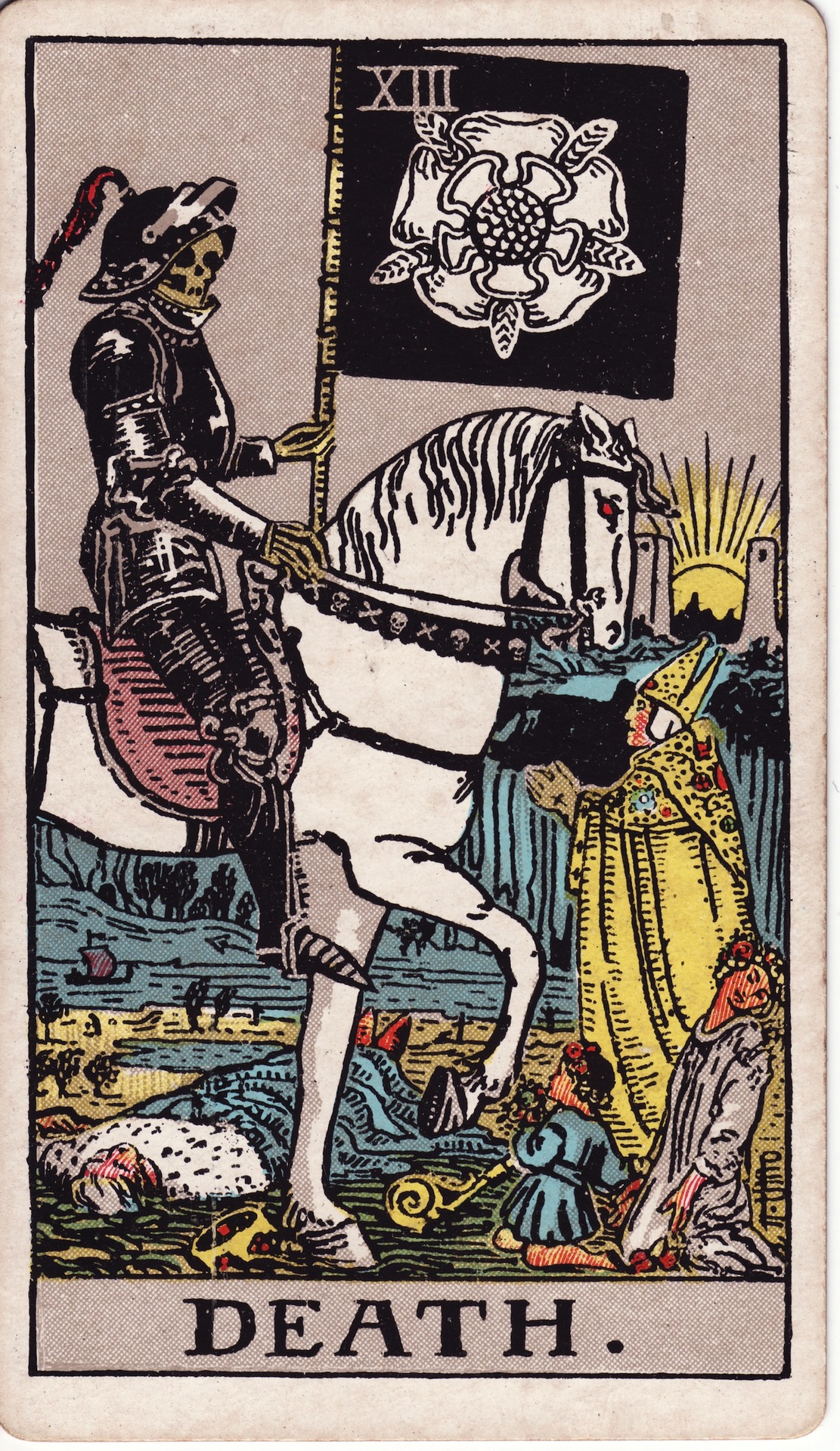
The Death card is one of the most misunderstood cards in the Tarot. It rarely signifies physical death; instead, it heralds profound transformation, the end of a cycle, and the necessary release of what no longer serves your highest good. As card number XIII in the Major Arcana, it carries no numerical label, emphasizing its detachment from ego and materiality. Death represents the universal law of impermanence — the composting of old forms to nourish new growth.
1) Upright Meaning
When the Death card appears upright, it signals an unavoidable and often deep-seated transformation. This is not a gentle nudge but a powerful force that sweeps away whatever is stagnant, obsolete, or detrimental. The imagery of the skeleton in armor, the rising sun, and the river of souls all point to an ending that is also a beginning. Upright Death asks you to surrender to change, to trust that the shedding of old identities, relationships, or habits is essential for evolution. It can appear during times of grief, loss, or crisis, yet its promise is renewal. The card often surfaces when you have outgrown a situation — a job, a home, a belief system — and the universe is pressing you to move on. Resistance will only prolong suffering. The Death card is accompanied by the awareness that nothing is permanent; clinging prolongs pain, while acceptance accelerates rebirth. In a reading, it urges you to let go of control and to see endings as fertile ground. It may also symbolize a period of intense personal growth, where your ego must die for your soul to expand. Importantly, Death does not predict a literal demise; it is about metamorphosis akin to the caterpillar dissolving in the chrysalis. The card is a herald of spring after a seemingly endless winter — the sun rises beyond the river, and the towers of old structures crumble to make way for new foundations.
2) Reversed Meaning
When the Death card appears reversed, the message pivots to resistance, stagnation, and fear of the inevitable. You may be clinging to a person, job, or identity that is already expired, hoping to resurrect what must die. This resistance creates a limbo state — the purgatory of avoiding necessary endings. The reversed Death often indicates an inability to accept loss or change, leading to depression, anxiety, or a sense of being stuck. It can also suggest that you are being forced to change against your will, yet you keep fighting the natural current. In some cases, it points to unfinished business that you are refusing to release, such as grudges, old traumas, or outdated self-concepts. The energy is one of paralysis: you see the need for transformation but lack the courage to initiate it. Alternatively, this card may warn that if you do not voluntarily let go, the universe will force the change more abruptly. The reversed Death carries a message of accountability: your suffering is prolonged by your grip. It can also indicate a delay in the transformation process — the death is happening slowly or being resisted by external factors. However, even in reverse, the card ultimately affirms that change is inevitable; the question is whether you will surrender or be dragged. The reversed Death challenges you to examine what you are so afraid of losing, and to recognize that holding on is causing more pain than the release itself.
3) In Love and Relationships
In the context of love and relationships, the upright Death card often appears at a pivotal crossroads. It may signal the end of a relationship that has run its course, freeing both partners to find more authentic connections. This can be a painful breakup or divorce, but the card promises that the space created will allow for healthier partnership. For singles, Death suggests you need to shed past patterns — codependency, fear of intimacy, idealized expectations — before you can attract a mature love. It can also indicate a transformation within an existing relationship, where old dynamics die to make way for deeper intimacy. For example, a couple may move from passion to companionship, or resolve a long-standing conflict that had been poisoning the bond. The reversed Death in love indicates a refusal to let go. You may be staying in a dead relationship out of fear, habit, or guilt, which only prolongs misery. It can also reflect a pattern of repeating the same toxic dynamics because you haven't fully processed a past ending. If you are single, reversed Death suggests you are unable to move on from an ex or from old wounds, blocking new love. The card urges you to do the inner work — therapy, journaling, or honest self-reflection — to release what is no longer alive. Ultimately, Death in a love reading forces you to confront the truth: every relationship has a life cycle, and honoring its ending is as important as its beginning.
4) In Career and Finances
When Death appears in career and finance readings, it signifies a major transition. Upright, it can indicate job loss, business closure, or the end of a professional identity. However, the card is not punitive; it clears the way for more aligned work. You may be fired from a role that was stifling your growth, or you might decide to quit a secure position to pursue a passion. The Death card often appears before a career pivot — retraining, entrepreneurship, or a shift into an entirely different field. Financially, it may signal a loss of income or a restructuring of assets, again with the aim of building a more sustainable foundation. The key is to view these changes as necessary pruning. In the reversed position, you are resisting the inevitable. Perhaps you are clinging to a failing company, refusing to adapt, or ignoring signs that your current career path is obsolete. Financially, reversed Death suggests you are holding onto investments or habits that are no longer viable. The card urges you to cut your losses and embrace a new strategy. It can also indicate that you are stuck in a thankless job because you fear change, even though you know you must move on. The reversed Death in career reminds you that stagnation is a choice, and the sooner you accept transformation, the sooner you can rebuild. In finance, it warns against emotional attachment to money — let go of what no longer serves your wealth's growth.
5) The Card's Advice
The Death card's advice is stark yet compassionate: surrender to the inevitable. Do not waste energy fighting the current; instead, focus on what you can salvage and how you can prepare for the new phase. This card calls for a radical acceptance of endings — whether they involve relationships, jobs, or self-image. It advises you to trust the natural cycle of destruction and creation, much like the seasons. The Death card teaches that your attachment to control is the source of your suffering. Let go of the old story you have been telling yourself about who you are or what your life should be. Embrace the unknown as fertile ground. Practically, this may involve decluttering your home, ending toxic friendships, or leaving a career that no longer sparks joy. The card encourages you to honor the past but not dwell in it. It also warns against half-measures: when Death comes, you must clear the debris completely. The advice is to say goodbye openly, grieve if needed, and then turn your face toward the rising sun. In a reading, Death often appears as a wake-up call to take decisive action toward transformation. It reminds you that your resistance to change is the only thing holding you back. Ultimately, the card advises: 'This too shall pass. Let it, so something new can be born.'
6) Combinations with Other Cards
When the Death card appears alongside other Tarot cards, its meaning is nuanced by their energies. With The Tower (XVI), Death amplifies the theme of sudden upheaval, often indicating a crisis that forces profound transformation — the crumbling of a long-held structure. The combination can be frightening but ultimately serves a deep purification. With The Hermit (IX), Death suggests a period of solitude necessary for inner transformation; you must retreat from the world to let go of old patterns. The Hermit provides the introspective space to process endings. When paired with The Wheel of Fortune (X), Death indicates that the change is karmic and part of a larger cycle — the ending is fated and perfectly timed. It encourages embracing the flow of life. With Judgement (XX), Death calls for a moment of reckoning; you are being called to rise from the ashes of your past, to forgive, and to begin anew with a cleansed slate. Judgement adds a spiritual dimension of resurrection. In suit interactions, Death combined with the Ace of Cups signals a beautiful emotional renewal after a painful breakup; tears become healing waters. With the Five of Pentacles, Death suggests financial hardship as a catalyst for a new value system — you may lose material security but gain deeper meaning. With the Knight of Wands reversed, Death warns against reckless plunges; the transformation must be deliberate, not impulsive. These combinations show Death is not just an end but a doorway, and the cards surrounding it define the nature of the rebirth.
Frequently Asked Questions
Does the Death card ever mean someone will actually die?
In almost all Tarot traditions, the Death card does not predict physical death. Its symbolism is about transformation, endings, and new beginnings. If you are worried about a literal passing, the card likely indicates a different type of ending — such as the conclusion of a relationship, a job, or a phase of life. Only in extremely rare, context-heavy readings (e.g., combined with many Minor Arcana cards indicating illness) might it hint at mortality, but even then it is not a direct prediction.
Is the Death card always negative?
No. While it can be unsettling, the Death card is one of the most positive in the deck when understood properly. It signifies necessary release and transformation. Just as a forest fire clears old growth for new seedlings, Death clears what no longer serves you. The pain of the ending is temporary, but the growth it enables is long-lasting. Reversed, it may indicate resistance, but even then the message is ultimately about the need to accept change.
What should I do if I keep drawing the Death card in readings?
Recurring appearances of the Death card suggest you are in a prolonged or intense period of transformation. It may mean you are resisting the change, so the message repeats. Examine areas of your life where you are holding on — a job, relationship, or belief. The card urges you to consciously release what is over. Consider journaling, therapy, or making concrete changes to align with the transformation. The repeated card is a call to action, not a curse.
How does Death card relate to Scorpio and the eighth house in astrology?
In tarot-astrology correspondences, Death is linked to Scorpio and the eighth house, which govern transformation, shared resources, intimacy, and the occult. Scorpio energy is intense, secretive, and unsentimental about endings. The Death card channels that energy of metamorphosis — the scorpion shedding its skin, the phoenix rising. It often appears when you are dealing with inheritance, debt, deep psychological change, or sexual rebirth. This connection deepens the card's message of regeneration through crisis.
Can the Death card indicate a positive transformation like a promotion or marriage?
Absolutely. The Death card can precede major positive life changes. However, it emphasizes that something must end first. For example, a promotion may require leaving behind a beloved team or role. A marriage may mean the death of single life or old dating habits. The card's energy is about transition, not the outcome. So while the end result can be joyful, the process requires letting go of the familiar. The card asks you to trust that the new chapter will be worth the loss.
Discover Mystral
Ready to explore what transformations await you? Let the Tarot guide your journey — book a personal reading today and embrace the endings that lead to your truest beginning.
Try for free