Five of Cups — Tarot Card Meaning
Cups
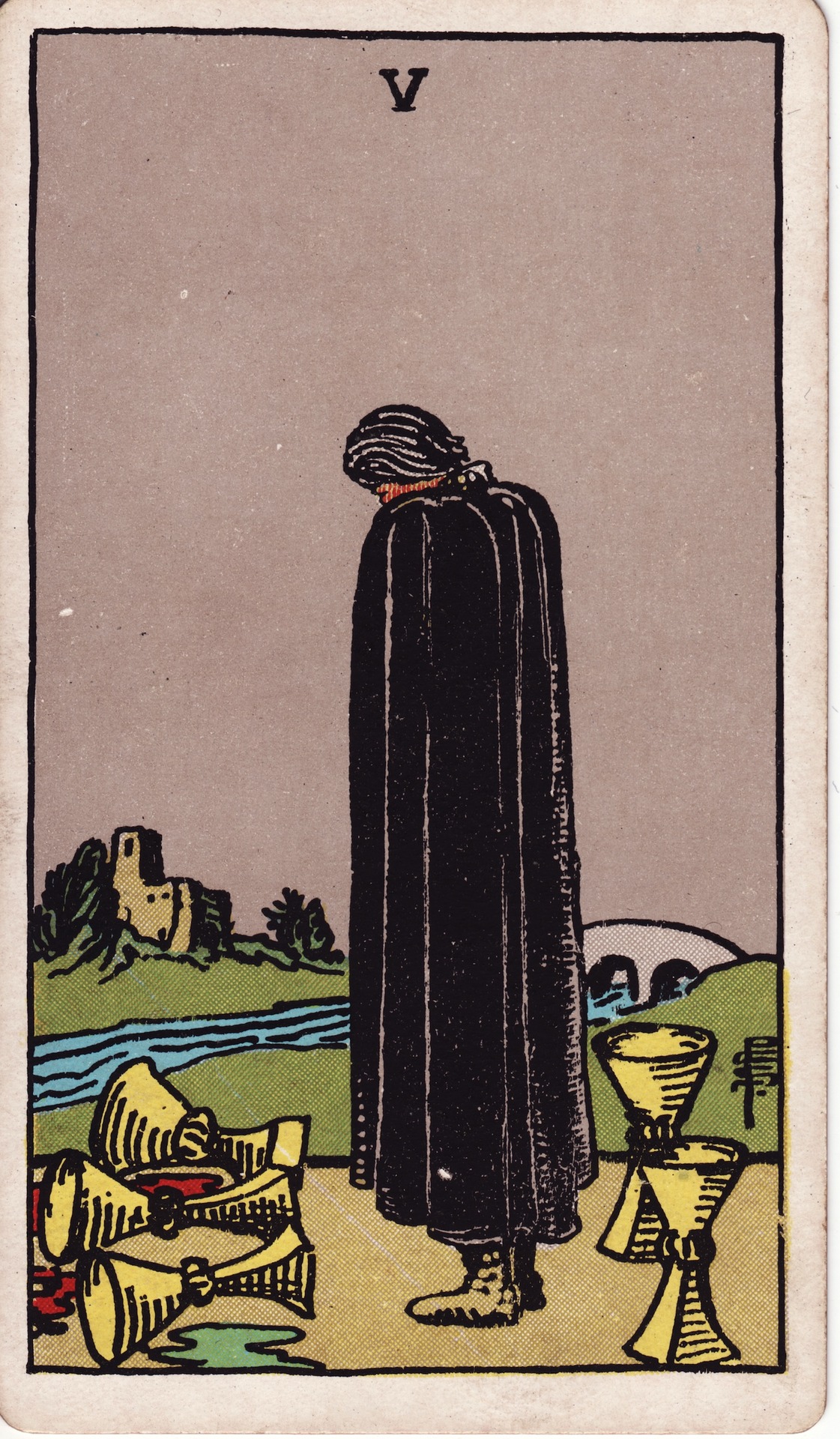
The Five of Cups is a card of loss, grief, and disappointment, yet it carries a profound message about acceptance and the path forward. In the classic Rider-Waite-Smith deck, a figure in a black cloak stands before three spilled cups, while two cups remain upright behind them. A river flows toward a distant bridge and a small house, symbolizing that while sorrow is present, hope and new beginnings are still accessible. This card does not predict permanent despair but rather invites the querent to acknowledge their pain and then shift focus to what remains. Its energy is deeply introspective, often appearing during times of mourning, breakup, or unmet expectations. Understanding its nuances—both upright and reversed—is essential for interpreting its role in a spread.
Upright Meaning
When the Five of Cups appears upright in a reading, it signifies a period of mourning, regret, or emotional withdrawal. The three spilled cups represent specific losses: a failed relationship, a missed opportunity, a broken dream, or the end of a cherished phase of life. The figures bowed head and covered face indicate that the querent is so focused on what has been lost that they fail to see the two cups still standing behind them. These upright cups symbolize what remains—unexpected support, lingering love, or a lesson that can be salvaged. The card does not judge the grief as excessive; rather, it validates the pain while gently urging the querent to turn around and acknowledge the resources still available. In a spiritual context, the Five of Cups often marks a necessary grieving process before rebirth. Notable figures who embodied this cards energy include Vincent van Gogh, whose intense emotional struggles fueled his art but also led to isolation; Sylvia Plath, whose poetry captured profound loss and the difficulty of moving beyond it; and Kurt Cobain, whose creative genius was shadowed by a deep sense of disillusionment. Each faced a crisis of meaning that required either a conscious shift toward resilience or a tragic surrender to despair. The upright Five of Cups does not predict a permanent state of sorrow—it is a call to honor the grief without letting it define the entire future. The river in the card image suggests that life continues to flow, and the bridge offers a path to a new emotional landscape, but only if the querent chooses to look up and walk forward.
Reversed Meaning
When reversed, the Five of Cups signals a turning point: the querent is beginning to accept the loss and move toward emotional recovery. The grief is still present, but the focus shifts from what is gone to what can be rebuilt. This reversal often appears after the initial shock has subsided, indicating that the person is ready to forgive—themselves or others—and to release the bitterness that accompanies disappointment. In practical terms, the reversed Five of Cups can mean that a relationship that seemed broken is being mended, a career setback is being reframed as a learning experience, or a creative block is dissolving as new inspiration emerges. The card warns against premature closure; true healing requires acknowledging the pain before letting it go. However, the reversed position offers a more optimistic outlook than the upright. It suggests that the querent has already begun the inner work of grieving and is now open to the two cups that remain. In some readings, this card reversed can also indicate a refusal to grieve properly—a person who suppresses their emotions may appear fine on the surface but remains stuck in denial. The key difference is that the upright card shows active sorrow, while the reversed shows either the start of recovery or a resistance to feeling the loss. Famous individuals who exemplify the reversed Five of Cups include Maya Angelou, who transformed a traumatic childhood into a legacy of resilience; Nelson Mandela, who emerged from 27 years of imprisonment with forgiveness rather than vengeance; and J.K. Rowling, who turned personal hardships into the foundation of the Harry Potter series. Each demonstrated that loss can be a catalyst for growth when one chooses to look beyond the spilled cups. The reversed Five of Cups invites the querent to stop mourning the past and start building a new reality, even if the process feels uncertain.
In Love and Relationships
In a love reading, the Five of Cups upright often signals the aftermath of a breakup, a betrayal, or a period of emotional distance. The querent may be fixated on what went wrong—the arguments, the unmet needs, the lost future—and unable to see the positive aspects of the relationship that might still exist. For singles, this card can indicate a lingering attachment to an ex or a fear of opening up again due to past hurt. The advice is not to rush into a new romance but to fully process the grief. For those in a relationship, the Five of Cups may point to a specific disappointment that has overshadowed the bond, such as a broken promise or a loss of trust. The two remaining cups suggest that the relationship still has foundations worth preserving, but only if both partners are willing to turn away from the spilled cups and work on what remains. When reversed, the Five of Cups in love indicates healing and reconciliation. A couple may be moving past a crisis, or an individual is finally ready to forgive and try again. This reversal can also signal that a person has learned from a past relationship and is now open to a healthier dynamic. However, if the reversed card appears in a spread where the querent is still in denial, it may warn that they are glossing over unresolved issues. In either position, the Five of Cups asks the querent to distinguish between genuine grief and self-pity. A healthy relationship requires the ability to mourn losses without letting them define the entire partnership. The cards presence in a love reading is rarely a permanent verdict—it is a snapshot of an emotional phase that can evolve with conscious effort. For example, a couple who has experienced infidelity may see the upright Five of Cups as the shock and sorrow, and the reversed as the slow process of rebuilding trust. The key is to honor the pain without becoming trapped in it.
In Career and Finances
In career and financial readings, the Five of Cups upright represents disappointment, missed opportunities, or a project that failed to meet expectations. The querent may have lost a promotion, seen a business venture collapse, or experienced a financial setback that feels devastating. The three spilled cups could symbolize wasted time, resources, or effort. The card cautions against obsessing over what went wrong to the point of ignoring other viable paths. The two upright cups indicate that some assets remain—perhaps a skill set, a supportive colleague, or a secondary income stream. For entrepreneurs, this card might appear after a product launch that underperformed, urging them to analyze the failure without abandoning their vision. In financial contexts, the Five of Cups can signal a period of austerity or loss, but it rarely predicts total ruin. The river and bridge in the card image suggest that a new opportunity lies ahead if the querent can redirect their focus. When reversed, the Five of Cups in career and finances suggests recovery and the ability to learn from mistakes. A person who was passed over for a promotion may now receive a different offer; a business that suffered a loss may find an unexpected pivot. The reversed card encourages the querent to see the setback as a lesson rather than a defeat. It can also indicate that a person is finally letting go of a failed project or a toxic workplace, freeing themselves to pursue something more aligned with their values. However, the reversed card can also warn against overly optimistic denial—if the financial damage is real, positive thinking alone won't fix it. The querent must take concrete steps to rebuild. Famous figures who embody the reversed Five of Cups in career include Steve Jobs, who was fired from Apple and later returned to lead its greatest innovations; Oprah Winfrey, who transformed early career setbacks into a media empire; and Walt Disney, whose first animation studio went bankrupt before he created Disneyland. Each turned professional loss into a foundation for greater success. The Five of Cups in career readings is a reminder that failure is rarely final; it is a detour, not a dead end.
The Card's Advice
The Five of Cups advises the querent to first allow themselves to feel the full weight of their grief. Suppressing sorrow only prolongs the healing process. The card recommends setting aside time to mourn—whether through journaling, therapy, or ritual—without judging the emotion as weak or unproductive. Once the grief has been acknowledged, the next step is to deliberately turn around and examine the two cups still standing. These represent the resources, relationships, and inner strengths that remain intact. The cards advice is not to look on the bright side in a superficial way, but to perform a honest inventory of what is still available. For example, after a breakup, the two cups might be your close friends, your personal growth, or the freedom to redefine your life. After a career loss, they could be your transferable skills, your network, or a new direction you had previously ignored. The Five of Cups also advises against isolating yourself in shame or regret. The bridge in the card image implies that connection—with others or with a new purpose—is the way forward. In a spiritual sense, the card encourages the querent to see loss as a teacher. Every spilled cup carries a lesson about attachment, expectation, or resilience. The advice is to extract that lesson and then release the cup. Finally, the Five of Cups warns against comparing your grief to others experiences. Your loss is valid, and your timeline for healing is unique. The card does not prescribe a specific duration for mourning, but it does insist that eventually you must choose to live again. The most practical takeaway is to stop staring at the spilled cups and start building with what remains.
Combinations with Other Cards
The Five of Cups takes on nuanced meanings when paired with other cards. With Death, it signifies a profound transformation following a major loss—the grief is necessary for rebirth, and the querent is in the final stages of letting go. With The Star, the combination offers hope after sorrow: the two upright cups are now illuminated by a vision of healing and renewal. The Star reassures that emotional wounds will eventually mend. With the Ten of Cups, the Five of Cups suggests that a family or relationship crisis can be resolved if the querent stops dwelling on past disappointments and focuses on the love that still exists. This pair often appears when a couple is considering divorce but has the potential to rebuild. With the Three of Swords, the combination intensifies heartbreak and betrayal; the Five of Cups adds a layer of regret and withdrawal. This pairing warns that the pain may be deep, but it also emphasizes that the querent must not isolate themselves completely—the two cups remain, even if they are hard to see. With the Four of Wands, the Five of Cups indicates a homecoming after a period of grief—perhaps a celebration that was delayed due to a loss, now possible again. With the Moon, the Five of Cups suggests that the grief is tangled with confusion, fear, or deception. The querent may not have a clear picture of what was lost or what remains. This combination calls for introspection and honesty before moving forward. With the Ace of Cups, the Five of Cups reversed is especially powerful: a new emotional beginning is emerging from the ashes of the old. The spilled cups are being refilled, and the querent is ready to love again. With the Nine of Swords, the Five of Cups points to sleepless nights and obsessive rumination over the loss. The advice is to seek professional help if the grief becomes paralyzing. With the Temperance card, the combination encourages balance: allow yourself to grieve, but also practice moderation in how long you dwell on the past. Temperance suggests that healing is a gradual blending of sorrow and acceptance. Each combination deepens the narrative of the Five of Cups, showing that loss is never isolated—it interacts with every other aspect of life.
Frequently Asked Questions
What does the Five of Cups mean in a general tarot reading?
In a general reading, the Five of Cups indicates a period of grief, disappointment, or emotional withdrawal. It points to a specific loss—such as a breakup, job failure, or shattered dream—that dominates your thoughts. The card urges you to acknowledge the pain fully, but then to turn your attention to what remains. It does not predict permanent sorrow; rather, it marks a necessary phase of mourning that, if processed correctly, leads to renewal. The two upright cups in the card image symbolize the resources, relationships, or lessons that are still available to you. The overall message is that while loss is real, it is not the end of your story.
How is the Five of Cups different from the Five of Swords?
Both cards involve conflict and loss, but they differ in focus. The Five of Swords is about defeat in a power struggle, often involving betrayal, humiliation, or a Pyrrhic victory where the winner feels empty. The Five of Cups, by contrast, is about emotional loss and mourning—the pain comes from within, not from an external battle. The Five of Swords suggests that you may have won but lost something important in the process, while the Five of Cups asks you to grieve what is gone and then move on. In a reading, the Five of Swords often points to a need to pick your battles, whereas the Five of Cups emphasizes the need to heal.
Can the Five of Cups ever indicate a positive outcome?
Yes, but only if the querent is willing to shift perspective. The upright card itself is not positive—it represents active grief. However, the presence of the two upright cups is a sign that not all is lost. The reversed Five of Cups is more clearly positive, indicating acceptance, forgiveness, and the beginning of recovery. In either position, the cards ultimate message is that healing is possible if you stop fixating on the spilled cups. The card does not promise that the loss will be reversed, but it does promise that you can rebuild a meaningful life from what remains.
What does the Five of Cups reversed mean in a love reading?
In a love reading, the reversed Five of Cups signals that a couple is moving past a crisis or an individual is ready to heal from a past relationship. It often appears when forgiveness has been offered or when a person has finally let go of resentment. For singles, it can mean that you are open to new love after a period of mourning. However, the reversed card can also warn against rushing the process—if you havent fully grieved, the healing may be superficial. The card encourages a balanced approach: acknowledge the pain that happened, but dont let it define your future relationships.
How should I interpret the Five of Cups when it appears with the Moon card?
The combination of the Five of Cups and the Moon suggests that your grief is entangled with confusion, fear, or deception. You may not have a clear understanding of what was lost or why. The Moon amplifies the emotional fog, making it hard to see the two upright cups. This pairing advises you to slow down and seek clarity before making decisions. It can also indicate that the loss was not what it seemed—perhaps a hidden factor contributed to the disappointment. Journaling, therapy, or a trusted confidant can help you untangle the emotions. The Moon warns against jumping to conclusions or acting on incomplete information.
Discover Mystral
Ready to navigate your own emotional landscape? Uncover the deeper meaning of the Five of Cups in your life with a personalized tarot reading at Mystral. Our expert interpreters will help you see both the spilled cups and the ones still standing.
Try for free